
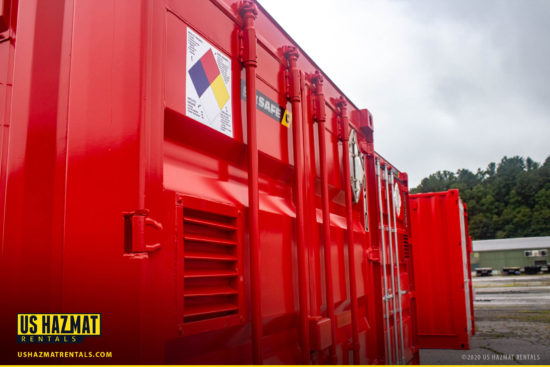
Non-fire-rated0 HourChemical Storage Shipping
BoxSAFE CX
- Non Fire-Rated
- 8 ft x 40 ft x 8' 5"
- 50 Qty 55 Gallon Drums
- 9 Pallets or Totes
- 302 Square Feet storage
Compliant storage and rental solutions for Oxygen, Liquid (O2). EPA, OSHA, and NFPA guidance for containment, segregation, and fire protection — with rental buildings matched to this material.

Liquid oxygen is used as an oxidant for liquid fuels in the propellant systems of missiles and rockets. Oxygen is widely applied in the metal industries in conjunction with acetylene and other fuel gases for metal cutting, welding, scarfing, hardening, cleaning and melting.
OXIDIZING GASES - Category 1 GASES UNDER PRESSURE - Refrigerated liquefied gas SIMPLE ASPHYXIANTS
Dry Chemical fire suppression is recommended for Oxygen, Liquid


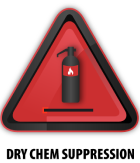

Guidance: Dry Chemical fire suppression is generally recommended for Oxygen, liquid (O2). *Please consult your raw material manufacturer's safety data sheet (SDS) and your local authority having jurisdiction to verify the most adequate fire suppression extinguisher for your specific storage or use.
Additional extinguishing notes: Use an extinguishing agent suitable for the surrounding fire.
Always confirm extinguishing agents against the manufacturer SDS and your authority having jurisdiction before specifying a rental building fire-suppression package.
Compliant storage and rental solutions for Oxygen, liquid should account for its listed hazards, climate control needs (-297 F), and segregation requirements. Never allow liquid oxygen to come into contact with combustible materials, such as oil or grease, as they could react with explosive violence. Adverse Health Effects. Central nervous systems toxicity including dizziness, convulsions and loss of consciousness after only 2-3 hours of exposure to pure oxygen can occur.
Review How the NFPA 704 hazard rating works when designing fire rating, containment, and building selection.
Properties: Physical state Melting point Relative density Cryogenic Liquid -218.4°C (-361.1°F) Not applicable. Odor Odorless. pH Color Colorless. Blue. Evaporation rate Not available. Flash point [Product does not sustain combustion.] Not available. Odor threshold Not available. : : : : : : : : : Appearance Boiling point : -183°C (-297.4°F) Flammability (solid, gas) : Extremely flammable in the presence of the following materials or conditions: reducing materials, combustible materials and organic materials. Lower and upper explosive (flammable) limits : Not available. Vapor pressure Vapor density 1.1 (Air = 1) : Not available. : Specific Volume (ft 3 /lb) : 12.0482 Gas Density (lb/ft 3) : 0.083 Critical temperature : -118.15°C (-180.7°F)
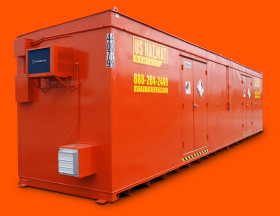
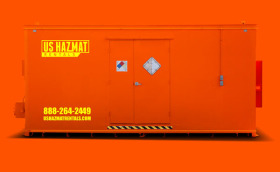
Matched to this chemical
Fire rating, footprint, and containment options from the US Hazmat Rentals fleet — sized for compliant chemical storage.
Material handling
US Hazmat Rentals buildings are designed around the primary storage formats teams use in the field — each path opens the matching storage solution on ushazmatrentals.com.
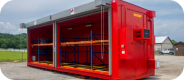
Large-volume tote storage with forklift-ready handling inside compliant buildings.
Explore solution
Drum and pallet-adjacent workflows sized for secondary containment and segregation.
Explore solution
Pallet-in, pallet-out layouts for packaged chemicals and rack-ready inventory.
Explore solution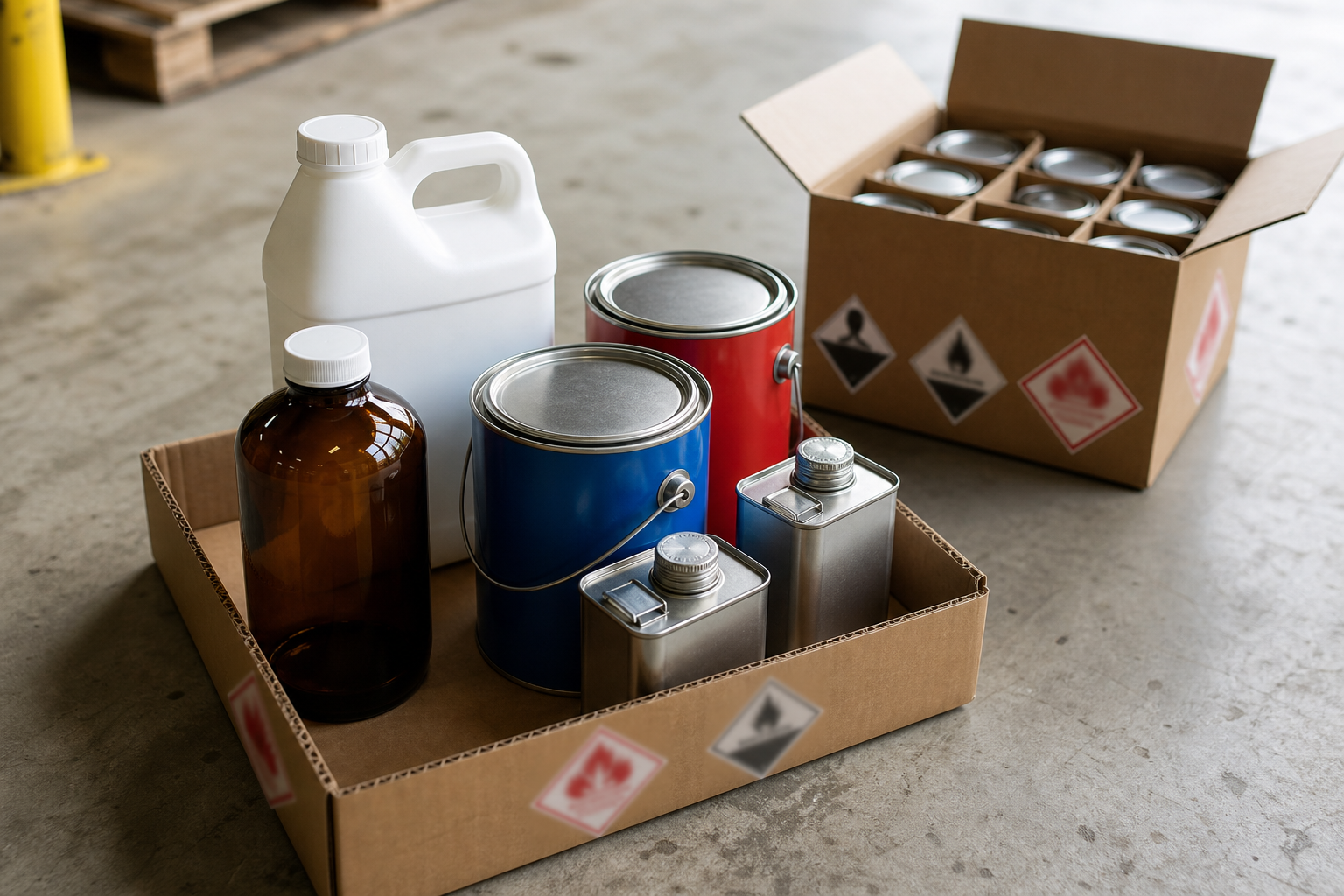
Locker and cabinet-scale storage for cans, jars, and other small-format chemicals.
Explore solutionWe have solutions designed for your workflow process needs.
Store Oxygen, liquid in EPA-, OSHA-, and NFPA-compliant containment suited to its hazards (Consult the SDS and applicable hazard classification). Climate range guidance: -297 F. Compatibility notes: Never allow liquid oxygen to come into contact with combustible materials, such as oil or grease, as they could react with explosive violence. Adverse Health Effects. Central nervous systems toxicity including dizziness, convulsions and loss of consciousness after only 2-3 hours of exposure to pure oxygen can occur. US Hazmat Rentals provides compliant chemical storage buildings available for rental.
Oxygen, liquid is not flagged as flammable in this database (No). Still verify the SDS and store in compliant containment for its listed hazard class.
Oxygen, liquid is listed as: Consult the SDS and applicable hazard classification. OXIDIZING GASES - Category 1 GASES UNDER PRESSURE - Refrigerated liquefied gas SIMPLE ASPHYXIANTS
Dry Chemical fire suppression is generally recommended for Oxygen, liquid (O2). *Please consult your raw material manufacturer's safety data sheet (SDS) and your local authority having jurisdiction to verify the most adequate fire suppression extinguisher for your specific storage or use.
Yes. US Hazmat Rentals offers EPA-, OSHA-, and NFPA-compliant chemical storage buildings and containment that can be matched to Oxygen, liquid. Request sizing and compliance guidance at https://ushazmatrentals.com/chemical-storage-quote-request/.